
Building Materials
DuPont Tyvek Supro Breather Membrane
BBA-approved roofing and wall breather membrane providing weather protection while allowing moisture vapour to escape from the building structure.
DuPont


High-performance PIR insulation board with 0.022 W/mK thermal conductivity for walls, floors, and roofs.
The Celotex GA4000 is a rigid PIR insulation board used across UK construction.
The Celotex GA4000 is one of the most widely specified PIR insulation boards in UK construction. It is used in floors, walls, and roofs across both new build and retrofit applications, and is a familiar product for builders working to current Building Regulations energy performance requirements.
PIR (polyisocyanurate) foam achieves a thermal conductivity of 0.022 W/mK, significantly better than mineral wool at 0.032–0.044 W/mK and EPS at 0.033–0.038 W/mK. This means a given U-value target can be achieved with a thinner board, which is important in floors and wall cavities where thickness is constrained by structure or headroom. The 100mm GA4000 board achieves an R-value of approximately 4.55 m²K/W, making it suitable for achieving the U-values required under current Building Regulations Part L for walls, floors, and flat roofs.
The GA4000 is a general-purpose board designed for ground floor slab insulation, warm flat roofs, inverted roofs, cavity walls, and internal wall insulation. The foil facing on both sides reduces radiant heat transfer and contributes a partial vapour resistance. For specialist applications such as external wall insulation systems, Celotex produce application-specific products with appropriate facing and declared performance values.
The GA4000 carries British Board of Agrément (BBA) certification, confirming independent assessment of performance and durability in use. BBA certification is accepted by building control bodies including LABC and NHBC for Building Regulations compliance sign-off, and is required by many architects and specifiers when approving insulation products for new build and refurbishment projects.
PIR boards should be cut using a fine-tooth handsaw or by scoring and snapping. The foil facing should be scored first to prevent delamination. Wear appropriate dust PPE when cutting. The foam produces fine particles.
The go-to PIR insulation board for UK construction. Excellent thermal performance, BBA certification, and wide availability from builders’ merchants make it the default specification across most application types.
The Celotex GA4000 is a rigid PIR (polyisocyanurate) insulation board, 2400 x 1200 x 100mm, with a thermal conductivity of 0.022 W/mK and foil facing on both sides. It is used in walls, floors and roofs. Its main appeal is that it delivers a given level of insulation in a thinner board than mineral wool or EPS.
Other manufacturers make PIR boards too, and the best known include Kingspan (whose Thermapitch range is PIR, while its Kooltherm range uses a different foam, phenolic) and Recticel, with ranges including Eurowall and Eurothane. Each product is designed for particular applications, such as cavity walls, pitched roofs or floors, and has its own declared performance and facings. Check the data sheet and certification of any board you are considering for your exact use.
The more useful comparison for many projects is between materials. The product file gives mineral wool at 0.032 to 0.044 W/mK and EPS (expanded polystyrene) at 0.033 to 0.038 W/mK. Lower is better, so PIR at 0.022 W/mK reaches a target U-value with less thickness. That is valuable where space is tight, such as floors with limited depth, internal wall insulation or a room where every millimetre counts.
The file’s main drawback is that PIR needs careful cutting. Mineral wool and EPS can be the right choice where thickness is not a constraint, or where the material’s other properties, such as sound absorption in mineral wool, matter more.
| Material | Conductivity (W/mK) | Main advantage |
|---|---|---|
| PIR (GA4000) | 0.022 | Thinnest for the same performance |
| EPS | 0.033 to 0.038 | Different material type |
| Mineral wool | 0.032 to 0.044 | Different material type |
The GA4000 carries British Board of Agrément (BBA) certification, which building control bodies and specifiers recognise. As a rule of thumb, choose PIR when space is limited and mineral wool or EPS when it is not, and always confirm the build up with your building control body or designer.
What does 0.022 W/mK actually tell me? It is the thermal conductivity, meaning how readily heat passes through the material. The lower the number, the better the insulation. Dividing the thickness in metres by that figure gives the R-value, which is why the file gives about 4.55 m²K/W for the 100mm board. Use these figures to compare products, not as a substitute for a full U-value calculation.
Can PIR be used under a screed or below a floor slab? The file lists ground floor slab insulation among its uses. Whether a particular board suits a given floor build up depends on loads and the build up design, so check Celotex’s data sheet for compressive strength and the recommended details for floors. Your designer or building control body should confirm the specification for your floor.
How should I cut it and seal joints with foil tape? The file advises a fine-tooth handsaw, or scoring the foil and snapping the board, scoring the foil first to prevent delamination. Wear dust protection, because the foam produces fine particles. Taping joints with a suitable foil tape is common practice to keep the facing continuous. Follow Celotex’s installation guidance for tape type and detailing.
Does the foil facing create a damp or fire concern? The file says the foil contributes a partial vapour resistance and reduces radiant heat transfer. Where moisture could be trapped, the design of the whole wall, floor or roof matters, so the build up should be designed properly. For fire, requirements depend on the building and use. Check the relevant Building Regulations and the manufacturer’s certification, and ask building control.
| Dimensions | 2400 x 1200 x 100mm |
|---|---|
| Thermal Conductivity | 0.022 W/mK |
| Core Material | Polyisocyanurate (PIR) |
BBA-approved roofing and wall breather membrane providing weather protection while allowing moisture vapour to escape from the building structure.
DuPont

300 micron (1200 gauge) polyethylene damp proof membrane for ground floor slabs, oversite and tanking applications.
Generic
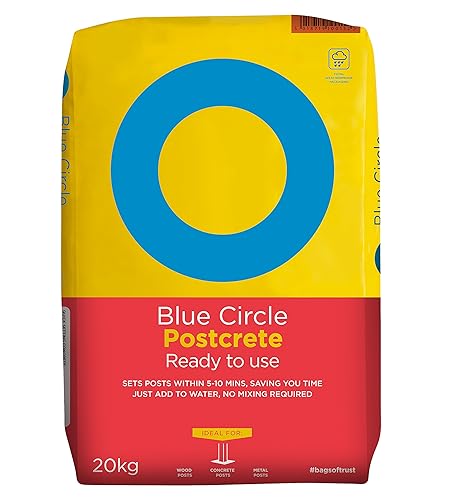
Just-add-water post fix that sets fence and gate posts in 10 minutes. No mixing required — pour around post and add water.
Blue Circle

Scrubbable, stain resistant matt emulsion for busy interior walls. ISO 11998 Class 1 scrub resistance, recoat after 4 hours.
Crown Trade
300 micron (1200 gauge) polyethylene damp proof membrane for ground floor slabs, oversite and tanking applications.
Generic