Twin and earth and SWA look nothing alike once you’ve handled both, but the confusion between them is real: both carry a supply, both have “earth” somewhere in the name or construction, and plenty of DIYers assume the cable already in the house is fine for the run to the shed. It generally isn’t. The two exist for different jobs, and picking the wrong one is either a compliance failure or an unnecessary expense.
Twin and Earth vs SWA: The Core Difference
Twin and earth (T&E) is flat, PVC-sheathed cable with two insulated cores and a bare earth conductor, designed for fixed indoor wiring where it’s protected by the building fabric: clipped to joists, buried in plaster, or run through stud walls. SWA (steel wire armoured cable) is circular, with an additional layer of galvanised steel wires wrapped around the inner cores beneath the outer sheath, giving it real mechanical protection and making it the standard choice for burial, exposed outdoor runs, and anywhere it could be damaged by impact.
| Twin and Earth | SWA | |
|---|---|---|
| Construction | Flat, PVC-sheathed, bare earth core | Circular, steel wire armour layer, separate CPC |
| Mechanical protection | None | High |
| Suitable for direct burial | No | Yes |
| Typical use | Indoor fixed wiring | Outdoor, buried, or exposed runs |
| Termination | Simple, strip and connect | Requires a gland at each end |
| Relative cost per metre | Lower | Higher |
Why Twin and Earth Isn’t Enough Outdoors
T&E has no armour and a relatively thin sheath, both are fine when the cable is protected by plaster, floor void, or conduit, but neither survives being buried directly in soil or left exposed to impact, UV, and moisture outdoors. Water ingress and physical damage from a fork, spade, or fence post are the two failure modes BS 7671 is specifically guarding against when it requires mechanical protection for buried and exposed cables.
The only way T&E can legitimately reach an outbuilding is fully enclosed in suitable conduit or ducting for its entire route, with no gaps or exposed sections. In practice this is more fiddly and often no cheaper than running SWA once you’ve bought the conduit, so most electricians go straight to SWA for anything leaving the building.
Why SWA Is the Standard for Outdoor and Buried Runs
The steel wire armour layer does two jobs: it protects the inner cores from impact and abrasion, and on larger cables it can also serve as the circuit protective conductor, removing the need for a separate earth core on some installations (check the specific cable’s design before relying on this). This is why SWA is the default specification for:
- Garden offices, workshops, and outbuildings
- Submains from the main consumer unit to a secondary consumer unit
- Outdoor lighting and power circuits run underground
- Any exposed external run where impact damage is a realistic risk
As a general guide, bury SWA at least 450mm deep in a garden or domestic area, and at least 600mm under a driveway or any area that will see vehicle loading. Lay cable route marker tape above it, since the next person digging in that spot won’t know it’s there otherwise.
Sizing an SWA Run
Cable size depends on the load, the length of the run, and the voltage drop that accumulates over distance, not just the amperage of the circuit it’s feeding. A long run to a garden office pushing significant load (an EV charger, an electric heater, a full sub-board) needs a proper calculation, since voltage drop on an undersized cable over 20-30 metres can be enough to cause nuisance tripping or poor equipment performance even though the cable would be adequate over a short run. As a rough starting point for a typical garden office submain over 15-25 metres carrying a modest lighting and socket load, 4mm² or 6mm² SWA is common, but always size against the actual calculated load and run length rather than a rule of thumb.
Termination: The Part DIYers Underestimate
T&E terminates simply: strip the sheath, connect the cores. SWA needs a proper gland at each end, a mechanical fitting that clamps the armour, maintains the earth continuity through the armour where used, and seals the cable entry. Getting this wrong is a genuine safety issue, not just a tidiness one, since a poorly glanded SWA termination can leave the armour’s earth path compromised. If you haven’t glanded SWA before, this is the point in the job most worth paying a qualified electrician for, even if you’re comfortable running the cable and digging the trench yourself.
Notifiable Work and Building Regulations
Wiring a new circuit to an outbuilding, including a new consumer unit or a submain from the house, is notifiable work under Part P of the Building Regulations in England and Wales. It needs to be either carried out by a registered competent person who can self-certify, or notified to building control for inspection. This applies regardless of whether you run T&E in conduit or SWA, so factor it into the job from the planning stage rather than after the trench is dug.
Do You Need a Separate Consumer Unit?
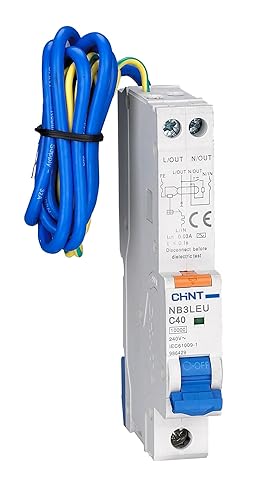
For a single light and one socket, a spur off an existing circuit may be enough. For anything more, a small consumer unit at the outbuilding end, fed by an SWA submain, is the more practical long-term setup. The Hager VML106 consumer unit is a solid RCBO-only option sized well for an outbuilding board, giving individual circuit protection at the point of use rather than relying entirely on protection back at the main house board. If you’re adding sockets in the outbuilding, a Type A RCBO such as the Chint RCBO Type A B16 covers the common requirement for general power circuits.