Tools
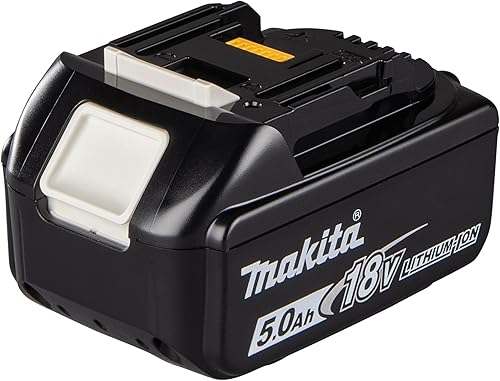
Makita BL1850B 18V LXT 5.0Ah Li-Ion Battery
Makita 18V LXT lithium-ion 5.0Ah slide battery with LED charge indicator, designed for the 18V LXT range.
Makita


18V brushless SDS+ rotary hammer drill with 2.0J impact energy, three-mode operation, and anti-vibration technology.
The Makita DHR242Z is a cordless SDS+ rotary hammer designed for drilling into masonry, concrete, and stone. The brushless motor delivers efficient power while anti-vibration technology reduces operator fatigue.
The DHR242Z fills the SDS+ slot in the Makita 18V LXT range, providing genuine rotary hammer capability without a mains cable. With 2.0 joules of impact energy, it handles the masonry drilling tasks that a standard combi drill cannot: anchor holes in blockwork, cable routes through brick, and fixing positions in concrete.
The 2.0J impact energy places the DHR242Z in the mid-range for cordless SDS+ tools. It drills up to 24mm in concrete using SDS+ bits, with a recommended maximum of 30mm in masonry. For anchor holes up to M12 and typical first and second fix electrical and plumbing drilling, this is entirely adequate. For larger holes in hard concrete (M16 anchors, soil pipe penetrations, or heavy structural fixings), a 3J or higher SDS+ or SDS-Max machine is more appropriate.
Makita’s AVT system uses an internal counterweight mechanism that oscillates to cancel the vibration transmitted to the operator’s hands and arms. Reducing hand-arm vibration (HAV) is important for compliance with the Control of Vibration at Work Regulations 2005, which set daily exposure limits for vibrating tools. The AVT system measurably reduces the HAV value compared to equivalent non-AVT hammer drills, extending safe daily operating time within the legal limit.
Rotary-only mode for drilling into timber and steel; hammer drill mode for masonry and concrete; and hammer-only (chisel) mode for light breaking, chasing, and removing tiles. The mode selector is accessible with one hand and clearly indexed between modes.
The DHR242Z is body-only (bare tool), accepting any Makita 18V LXT battery. For the best performance on sustained drilling, a 4.0Ah or 5.0Ah battery is recommended.
A practical cordless SDS+ for everyday trade drilling tasks. The AVT system and brushless motor make it a sensible long-term investment for tradespeople already on the Makita 18V LXT platform.
The DHR242Z sits in the middle of the cordless SDS+ field. At 2.0 joules it is a step up from a combi drill’s hammer function and a step down from the larger SDS+ and SDS-Max machines. Other manufacturers, including DeWalt, Bosch Professional and Milwaukee, all make 18V SDS+ hammers in a similar class, and the differences between them are mainly in weight, vibration control and the battery platform they belong to. As with other cordless tools, the best match is usually the one that shares batteries with the rest of your kit. If you already have Makita 18V LXT tools, the DHR242Z needs only the body.
What sets this model apart on paper is its anti-vibration technology (AVT). Hand-arm vibration is a genuine health issue for tradespeople who drill masonry all day, and the Control of Vibration at Work Regulations 2005 set exposure limits for employers. A tool that reduces the vibration reaching your hands can extend the time you can work safely, though you should still check the declared vibration value in the manual and follow your employer’s exposure assessment.
Against a combi drill with hammer action, an SDS+ hammer is far quicker in brick, block and concrete, because the hammering mechanism does the work and the SDS+ bit moves freely in the chuck. The trade-off is weight. At 3.3kg bare, the DHR242Z is noticeably heavier than a compact combi, and it is a poor choice for fine screwdriving.
Against a corded SDS hammer, the cordless version wins on convenience. There is no cable to trip over or extension lead to find, and it is easy to carry up a ladder. A corded machine, however, never runs out of charge and generally suits long days of continuous heavy drilling better. For holes much larger than 24mm in hard concrete, or for serious breaking, the sensible move is to step up to a more powerful SDS+ or SDS-Max tool.
Can the DHR242Z chisel, and for how long? Yes. The hammer-only mode turns off rotation, so you can fit an SDS+ chisel for light jobs such as chasing, removing tiles and knocking off small amounts of render. It is not designed for heavy breaking. Chiselling drains the battery quickly, and long sessions will also make the tool warm, so take breaks and keep a spare battery charged.
Is cordless SDS better than corded for a full day? It depends on the work. For drilling the odd fixing or cable route around site, cordless is quicker and easier. For all-day drilling of many holes, a corded machine does not need battery swaps. A 4.0Ah or 5.0Ah battery is recommended for sustained drilling, and having two on rotation keeps you going.
Which bit sizes suit a 2.0J hammer? The tool drills up to 24mm in concrete using SDS+ bits, with a recommended maximum of 30mm in masonry. It is best for anchor holes up to M12 and for typical electrical and plumbing drilling. Larger holes will be slow and will strain the tool and battery.
Why does it use a different chuck from my combi drill? SDS+ bits have special grooves that lock into the chuck while still letting the bit slide back and forth, so the hammer mechanism can strike it directly. A normal keyless chuck grips the bit tightly, which does not suit that action. This is why SDS+ drills need SDS+ bits, though adaptors exist for standard round-shank bits.
| Voltage | 18V |
|---|---|
| Impact Energy | 2.0J |
| No-Load Speed | 0-950 RPM |
| Drilling Capacity (Concrete) | 24mm |
| Chuck Type | SDS-Plus |
| Weight (bare) | 3.3kg |
Makita 18V LXT lithium-ion 5.0Ah slide battery with LED charge indicator, designed for the 18V LXT range.
Makita

Professional M-class mobile dust extractor with automatic filter cleaning, 26-litre container and anti-static hose for dust-free working on site.
Festool

Cordless plunge saw delivering 1,620W-equivalent power with multi-brand guide rail compatibility for professional sheet material work.
Bosch

18V brushless cordless angle grinder with 115mm disc, KickBack Control, and restart protection for cutting and grinding.
Bosch Professional

Compact 18V XR brushless combi drill with two-speed gearbox and 70Nm torque, designed for trade professionals.
DeWalt