Tools
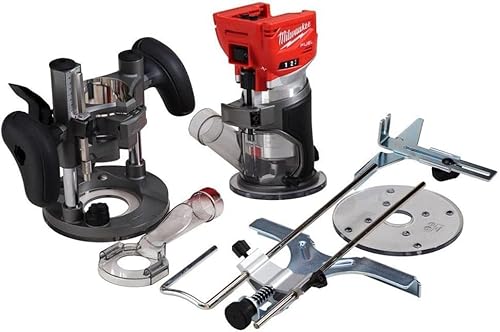
Milwaukee M18 FTR-0X FUEL Brushless Trim Router
Cordless M18 FUEL brushless trim router with variable speed from 10,000 to 31,000 RPM, a plunge base and 0.4mm depth adjustment.
Milwaukee

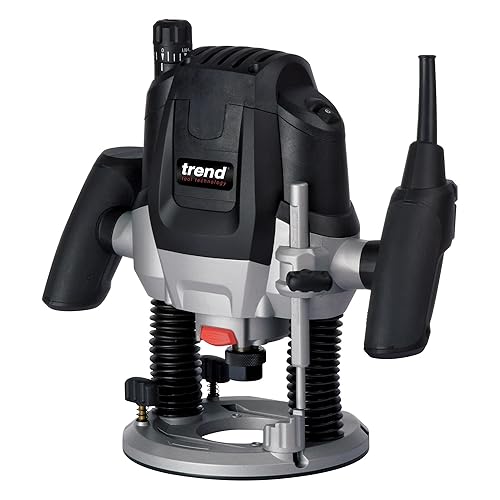
Professional 2100W plunge router with variable speed, soft start and 1/2" collet for worktop joints, timber profiling and cabinet making.
The Trend T7EK is a 2100W, 1/2" plunge router for joiners and kitchen fitters. The variable speed control lets you run larger bits more slowly and match the speed to the bit for a cleaner finish.
The Trend T7EK is a 1/2” plunge router aimed at worktop joints, hardwood profiling and cabinet work.
The 2100W motor suits jobs such as routing a worktop mason mitre joint or running a large straight cutter through hardwood. The variable speed dial is equally important: large-diameter bits must run slowly to avoid dangerous vibration, while small profile bits need higher speeds for a smooth finish. The 8,000 to 20,000 RPM range covers both.
The 50mm plunge covers housing joints and mortises. In addition, the fine height adjuster allows micro-adjustments to the cutting depth, which is critical when fitting worktop joints where a fraction of a millimetre determines whether the joint pulls tight or gaps.
The Trend T7EK is a powerful plunge router for worktop jointing, edge profiling and housing joints. Check the plunge depth and speed range above against the bits you plan to use.
The Trend T7 is a 2100W plunge router with a 50mm plunge stroke. It takes 1/2 inch cutters directly and 1/4 inch cutters through the supplied reducing sleeve. The UK version has a speed range of about 8,000 to 20,000 rpm, soft start, built-in fine height adjustment, a spindle lock and a 35mm dust outlet. It weighs about 4.3kg and comes with a guide bush, dust spout, centring pin and carry case.
Those features suit it to jobs such as cutting worktop joints with a template jig, housings, grooves and edge profiles on larger work.
| Router type | Typically suits | Things to weigh up |
|---|---|---|
| Full-size plunge router like this one | Worktop joints, deep cuts, large cutters | Weight and size make it heavy for one-handed work |
| Makita, Bosch and Festool plunge routers | Similar tasks, each with its own features | Compare collet sizes, dust outlets and how the speed control works |
| 1/4 inch trim router | Edge trimming, small profiles, one-handed work | Less suited to large cutters or deep cuts |
| Fixed-base router | Edge work and table mounting | No plunge action |
If you only need to trim edges and make light profile cuts, a smaller tool is easier to handle. Our page on the Milwaukee M18 FTR trim router covers a cordless 1/4 inch trim router, which is a different kind of tool from a mains-powered plunge router. If you cut worktop joints, check your jig instructions for the router power, cutter and guide bush size they call for.
Dust is a practical concern with any router, and ear protection is needed. The 35mm dust outlet lets you connect an extractor, which cuts down the mess and the dust you breathe in, and the soft start eases the router into motion when you switch on. A router this size is heavy at about 4.3kg, so clamp your work firmly and keep both hands on the handles. Follow the manufacturer’s instructions throughout.
What is the difference between a 1/4 inch and a 1/2 inch collet, and when do I need the sleeve? The collet is the part that grips the cutter shank. A 1/2 inch collet holds thicker, stiffer cutters, which vibrate less and suit large or deep cuts. The reducing sleeve fits inside it so you can use 1/4 inch shank cutters. Use the sleeve only with 1/4 inch cutters and fit the cutter fully, then tighten it as shown in the manual.
How do I cut a worktop joint? Use a worktop jig made for the joint type, and fit the guide bush and cutter that the jig maker specifies. Clamp the jig firmly, set the depth, and cut in several passes rather than one deep cut. Test on an offcut first. Follow the jig maker’s instructions throughout.
Why do large bits need lower speeds? A larger cutter has a bigger diameter, so its edge travels faster at the same rpm. Running a large bit too fast can cause burning, vibration and a loss of control, which is a safety risk. Use the bit maker’s speed chart and set the dial to match. Smaller cutters generally suit higher speeds.
What personal protective equipment does routing need? Wear ear defenders and eye protection against chips. Use dust extraction through the outlet, and a dust mask suited to the material, as wood and board dust can be harmful. Keep hands clear of the cutter, unplug the router before changing a bit, and follow the manufacturer’s instructions.
| Motor Power | 2,100W |
|---|---|
| Speed Range | 8,000-20,000 RPM |
| Collet Size | 1/2" (12.7mm) |
| Plunge Depth | 50mm |
| Fine Height Adjustment | Yes |
| Dust Port | Integrated |
| Supplied In | Kitbox with accessories |
Cordless M18 FUEL brushless trim router with variable speed from 10,000 to 31,000 RPM, a plunge base and 0.4mm depth adjustment.
Milwaukee

Professional M-class mobile dust extractor with automatic filter cleaning, 26-litre container and anti-static hose for dust-free working on site.
Festool

Cordless plunge saw delivering 1,620W-equivalent power with multi-brand guide rail compatibility for professional sheet material work.
Bosch

18V brushless cordless angle grinder with 115mm disc, KickBack Control, and restart protection for cutting and grinding.
Bosch Professional

Compact 18V XR brushless combi drill with two-speed gearbox and 70Nm torque, designed for trade professionals.
DeWalt