Copper vs Plastic Pipe: Choosing the Right Material
Three pipe materials dominate domestic plumbing and heating in the UK: copper, plastic (PEX or polybutylene), and MLCP (multi-layer composite pipe). Each has genuine strengths, and the right choice depends on the application, the fittings system, and practical site conditions.
Copper Pipe
Copper has been the standard material for UK plumbing and heating for decades, and for good reason. It is dimensionally stable, highly durable, bacteriostatic (naturally resistant to biofilm growth), and capable of handling temperatures well above anything encountered in domestic heating or hot water systems.
Advantages:
- No temperature or pressure limitations in domestic applications
- No requirement for pipe inserts in compression or push-fit fittings
- Rigid and dimensionally stable — does not expand and contract significantly with temperature cycling
- Compatible with all fitting systems (solder, compression, press, push-fit)
- Very long service life — 50+ years when correctly installed
Disadvantages:
- More expensive than plastic, both for pipe and fittings
- Requires skill to solder (end-feed or Yorkshire fittings), or additional cost for press or push-fit fittings
- Can be subject to dezincification (in certain water conditions) if brass fittings are not DZR-rated
- Theft risk on exposed installations
When to use copper:
- All heating circuits, particularly high-temperature areas near the boiler
- Hot water cylinders and connections where sustained high temperatures occur
- Exposed pipework where appearance and rigidity matter
- Any application requiring a permanent, inspectable installation
Plastic Pipe (PEX and Polybutylene)
Plastic pipe (most commonly cross-linked polyethylene, PEX, or polybutylene under brand names like JG Speedfit) is widely used for both cold and hot water supplies and, with appropriate products, for central heating.
Advantages:
- Cheaper than copper for both pipe and fittings
- Very easy to work with — cuts cleanly with a pipe cutter or sharp knife, bends easily around obstacles
- Flexible — can be run in longer continuous lengths with fewer joints
- Does not corrode
Disadvantages:
- Higher thermal expansion than copper — requires allowance for movement on long runs and at fixings
- Push-fit connections to plastic pipe require a pipe insert (stiffener) to prevent the fitting from collapsing the pipe wall. Forgetting inserts is a very common cause of leaks.
- Temperature limits apply — most plastic pipe is rated to 95°C at 10 bar, but check the specific product rating for heating circuits
- Can be permeable to oxygen diffusion (in plain polybutylene), which can cause system corrosion in sealed heating circuits. MLCP or oxygen-barrier PEX is preferred for heating.
- Not suitable for use directly adjacent to boilers or hot water cylinders where sustained very high temperatures occur
When to use plastic:
- Cold and hot water supply pipework (first fix, concealed runs)
- Retrofit plumbing where flexibility makes installation easier
- Situations where running long lengths with minimal joints is advantageous
The JG Speedfit 15mm push-fit elbow is a widely used fitting for plastic and copper pipe connections in both water supply and heating applications.
MLCP (Multi-Layer Composite Pipe)
MLCP has an aluminium core bonded between inner and outer layers of plastic (typically PEX). The aluminium layer gives it shape memory (it holds bends and can be formed with a bending spring or tool), substantially reduces thermal expansion compared to plain plastic, and provides an effective oxygen barrier — important for sealed central heating systems.
Advantages:
- Holds bends without fittings, reducing joint count
- Thermal expansion close to copper — suitable for long runs without the movement allowance required for plain plastic
- Oxygen barrier prevents system corrosion in heating circuits
- Suitable for underfloor heating
Disadvantages:
- More expensive than plain plastic pipe
- Requires MLCP-specific fittings or adaptors in some push-fit systems
- Requires specific bending tools for larger diameters
MLCP is particularly popular for underfloor heating circuits and first-fix plumbing where the pipe is to be concealed in walls or floors.
Fitting Systems
The pipe material and fitting system are related decisions:
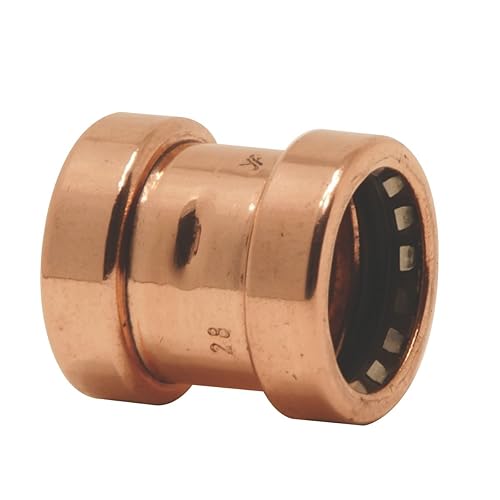
Solder fittings (end-feed and Yorkshire) — copper only. End-feed fittings require solder to be applied during the joint; Yorkshire fittings have a pre-soldered ring inside. Both produce a permanent, very reliable joint with low fitting cost. Requires a blow lamp and proper flux. The Yorkshire Tectite Sprint push-fit coupling offers the same brand reliability in a push-fit format.
Compression fittings — work with copper, plastic (with insert), and MLCP. Require no heat. Reliable and demountable but bulkier than solder fittings and more expensive than push-fit. Preferred in accessible locations (under sinks, at appliance connections).
Push-fit fittings — compatible with copper, plastic, and MLCP (check specific fitting for MLCP compatibility). Fast to install, demountable, no tools required beyond a pipe cutter. Higher per-fitting cost but saves installation time.
Press fittings — require a dedicated pressing tool. Used primarily on copper and MLCP in commercial or high-volume domestic installations. Very fast, permanent, and reliable.
Cutting and Preparing Pipe
Regardless of material, clean square cuts are essential. A wheel-type pipe cutter (rather than a hacksaw) produces burr-free cuts on copper and plastic. The Rothenberger PipeSlice 15mm copper pipe cutter is a good compact option for copper pipe. For plastic pipe, the same tool works, or a dedicated plastic pipe cutter can be used.
After cutting copper, deburr the inside of the pipe before fitting — a burr on the pipe end damages push-fit seals and restricts flow over time.
Rules of Thumb
- Use copper near the boiler, on hot water cylinders, and in any high-temperature location
- Use plastic with oxygen-barrier or MLCP for concealed heating circuits and underfloor heating
- Use plain plastic for cold and hot water supply pipework where it is concealed
- Always use pipe inserts with push-fit or compression fittings on plastic pipe
- Use MLCP where long free-running lengths, shape memory, or low-expansion properties are needed
- Use compression fittings in accessible locations; push-fit for concealed first-fix where speed matters