Building Materials
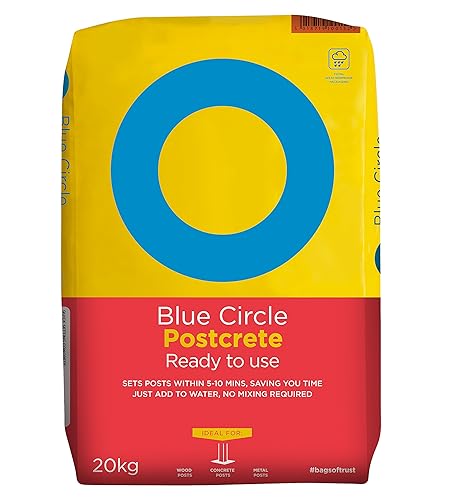
Blue Circle Postcrete 20kg Ready-to-Use Post Fix
Just-add-water post fix that sets fence and gate posts in 10 minutes. No mixing required — pour around post and add water.
Blue Circle
Check Price on Amazon
Browse our range of building materials products with full specifications, key features, and independent product information.
Building materials form the structural and weather-resistant fabric of every construction project, from a garden wall to a full new build. Getting the specification right — not just for cost, but for performance, durability, and compliance — is fundamental to a building that stands the test of time and passes building control inspection.
This category covers the core fabric of construction: aggregates, cement and concrete products, bricks, blocks, lintels, timber, sheet materials (OSB, plywood, MDF), insulation (rigid, mineral wool, spray foam), membranes, damp-proof courses, and roofing products including tiles, slates, and flat roof systems. Each product type operates within its own technical standards and Building Regulations compliance framework.
Structural adequacy: Load-bearing materials must be specified to handle the actual loads imposed — not just selected on tradition or habit. Timber sections must meet BS EN 338 strength class requirements; lintels must be specified by span and load; concrete must achieve the correct compressive strength class (C16/20, C25/30, etc.) for its application.
Thermal performance: Part L of the Building Regulations sets minimum U-value requirements for walls, roofs, and floors. Insulation product data sheets provide lambda (thermal conductivity) values — the lower the lambda, the better the insulating performance per millimetre of thickness. Comparing products on lambda rather than headline R-value avoids specification errors when space is limited.
Fire performance: Reaction to fire is classified under BS EN 13501-1 from A1 (non-combustible) through to F. Insulation in cavities, on external facades, and in roof voids must meet the correct classification for the application — particularly after changes to Approved Document B following the Grenfell inquiry.
Moisture and exposure: Materials for external or below-ground use must be rated for their exposure class. Mortar mixes, for instance, are designated M2 through M12 — a sulphate-resistant mix is essential for chimneys and below-DPC work, where standard mixes would fail prematurely.
Mixing material specifications on-site without checking compatibility — for instance, using different cement types in the same pour, or combining timber treatment classes incorrectly — can create structural weaknesses or void warranties. Another common error is under-ordering structural materials to reduce waste, then facing extended lead times mid-project when additional supply is needed.
Main contractors, groundworkers, bricklayers, carpenters, structural engineers, building control officers, and self-builders all need detailed technical information on building materials to make informed procurement decisions and produce accurate specifications.
Just-add-water post fix that sets fence and gate posts in 10 minutes. No mixing required — pour around post and add water.
Blue Circle
Check Price on Amazon
Scrubbable anti-bacterial matt emulsion for high-traffic, healthcare, and education environments. Stain-resistant and easy to clean.
Crown Trade
Check Price on Amazon
BBA-approved 300mu (1200 gauge) polyethylene damp proof membrane for ground floor slabs, oversite and tanking applications.
Generic
Check Price on Amazon
Scrubbable, stain-resistant trade emulsion for high-traffic areas including kitchens, hallways, and commercial environments.
Dulux Trade
Check Price on Amazon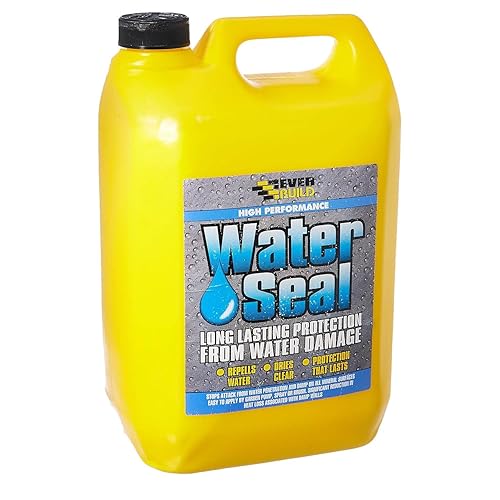
Silicone-based water repellent for exterior brick, stone, and concrete. Provides invisible, long-lasting protection from water damage.
Everbuild
Check Price on Amazon
Single coat coverage matt emulsion for ceilings and walls, offering trade quality at a DIY-friendly price point.
Johnstone's
Check Price on Amazon
Lightweight ready-mixed jointing compound for plasterboard joints, achieving a seamless finish in two coats without the need for separate filler and finisher.
Knauf
Check Price on Amazon
Economy trade emulsion for large-area coverage on new plaster and previously painted surfaces. Available in light grey.
Leyland Trade
Check Price on Amazon
Surface preparation powder for cleaning walls before painting. Removes grease, nicotine, and grime when dissolved in warm water.
Mangers
Check Price on Amazon
Oriented strand board for roofing, flooring, and sheathing. Moisture-resistant OSB3 grade suitable for structural and load-bearing use.
Sterling
Check Price on Amazon
Spray-on stain blocker for water stains, smoke damage, and nicotine. Prevents bleed-through under paint.
Polycell
Check Price on Amazon
Shed and fence treatment with 5-year protection. Water-based, quick drying, and available in multiple colours.
Ronseal
Check Price on Amazon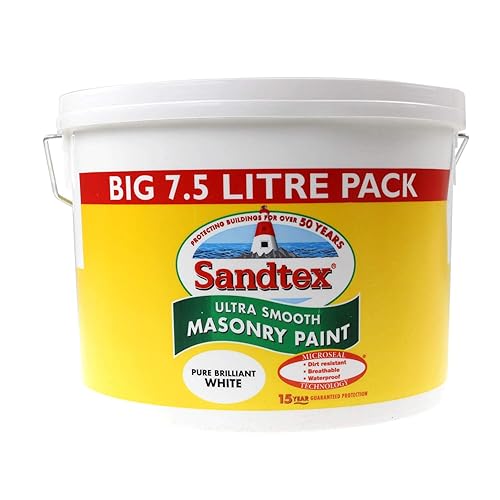
Exterior masonry paint with 15-year protection and smooth finish. Suitable for rendered, pebbledash, and brick walls.
Sandtex
Check Price on Amazon
Professional gun-grade polyurethane expanding foam for filling gaps, sealing around frames, and insulating voids in construction.
Soudal
Check Price on Amazon
BBA-approved roofing and wall breather membrane providing weather protection while allowing moisture vapour to escape from the building structure.
DuPont
Check Price on Amazon
Universal water-based primer that seals stains, adheres to virtually all surfaces, and provides a reliable base for topcoats on problem surfaces.
Zinsser
Check Price on Amazon
High-performance PIR insulation board with 0.022 W/mK thermal conductivity for walls, floors, and roofs.
Celotex
Check Price on Amazon
PVA-based wood glue with superior bond strength, water resistance, and fast 20-minute clamp time.
Gorilla
Check Price on Amazon